
Blog

  1. Bubble Sheet Blues review, St. Paul Pioneer Press

    January 5, 2026

    My latest novel, Bubble Sheet Blues, was  released on Friday, and Mary Ann Grossman, the long-time book editor of the St. Paul Pioneer Press gave it an outstanding review.  (highlights in bold)

    Bubble Sheet Blues review, by Mary Ann Grossman, St. Paul Pioneer Press

    Bubble Sheet Blues by William Durbin (Lake Vermillion Press, $11.95, pub. date: 1-2-26)

    It’s going to be a good year for readers if William Durbin’s funny and timely new novel for young readers is an example of what’s to come.

    Adults have been talking about mandatory student testing for years, but we rarely hear the feelings of the kids who are forced to take them. That’s why Durbin, two-time Minnesota Book Award winner and a former English teacher, introduces us to Luke Collins, an eighth-grader  who’s not very interested in school.

    Luke has been coasting through several grades by rewriting a research paper about manatees, earning him the nickname Manatee Cowboy from friends Claire and Gabe. But now he’s been caught by the librarian and has to come up with a new research topic.

    During a session with his third-grade reading buddy, Luke watches the little kids sob as they face the coming Florida Comprehensive Assessment Test (FCAT) required by Jeb Bush, Florida’s governor from 1999 to 2007. If kids don’t pass the test (marking answers on a “bubble sheet”) they will have to repeat third grade, even if they are smart and their day-to-day work is excellent. No wonder the first chapter is titled “Bubble Sheet Blues or Dead Dogs and Puke Piles.”

    Luke is interested in why this test incites terror in the kids and unease among teachers. As he begins to research the test, he realizes the injustice inherent in the system. He uncovers financial benefits to the testing companies, collusion with lawmakers, and how the tests are unfair to students for whom English is a second language and those with conditions such as dyslexia. Some wealthy families can move their kids to private schools, which don’t give the test. But trailer park students like Luke remain in the public schools.

    He figures out the standardized tests aren’t for the students’ benefit, but are a way to keep them from critical, thoughtful learning by making teachers spend weeks and sometimes months preparing for the test. The more Luke learns the angrier he gets, leading to outright revolution in the school, led by Luke, optimistic Claire, and tech-savvy Gabe.

    What happens then, thanks to sympathetic teachers and some parents, makes for a great ending. The trio is so jazzed they might even take on banned books for their next project. Luke’s eighth-grade voice is spot on, serious when he’s talking about his research but also funny in dialogue with his friends.

    Although this story is being marketed for young adults, every adult with an interest in education should read it, too.

    Durbin, who lives near Lake Vermillion in northern Minnesota, is known for his young adult historical fiction, including Minnesota Book Award-winners “The Broken Blade” and “The Darkest Evening.” Among his other popular books are “Blackwater Ben” and its sequel “Dead Man’s Rapids.”

    Teaser quote: “I walked back to the computers and did a web search of ‘standardized testing in Florida.’ I expected to find a bunch of dull, professor-type essays, but I was surprised to see that two of my all-time favorite authors — Carl Hiaasen and Dave Barry, both newspaper columnists — had written about public school testing in Florida.”
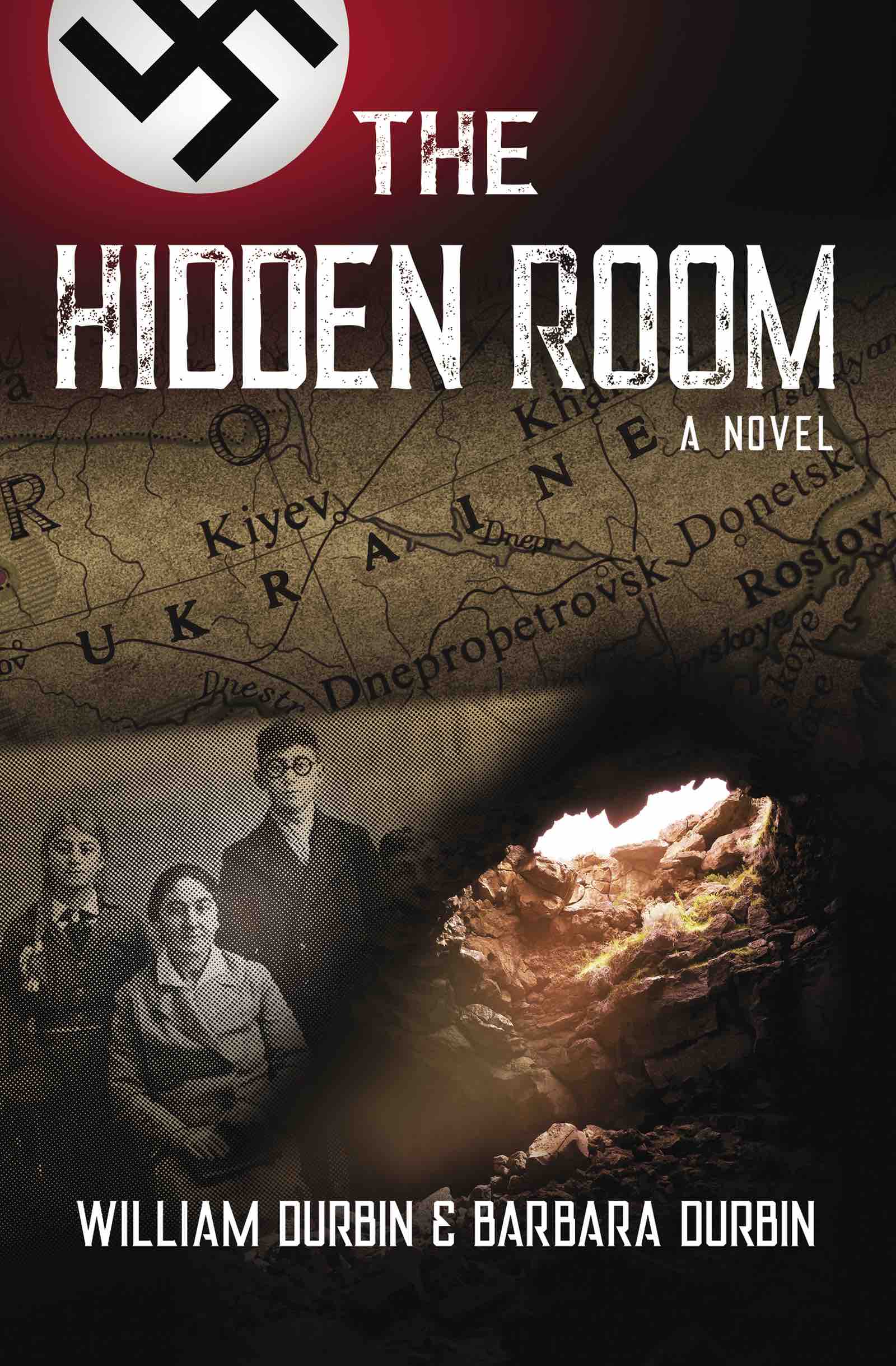

  2. The Hidden Room review from St. Paul Pioneer Press

    August 1, 2022


    The Hidden Room by William Durbin and Barbara Durbin (Lake Vermillion Press, $11.99)


    Reviewed by MaryAnn Grossman, St. Paul Pioneer Press  6/18/22


    “‘Run!’ I shout, stunned that we’ve been caught in the middle of a German and Russian tank battle. We bolt across the bridge, veering toward the woods just as a tank behind us returns fire.”

    This riveting story of a Jewish family who lived in a cave in Ukraine during the last year of World War II is written for middle grade readers but it should be read by everyone who watches the horrors unfolding in that country now.

    Written by the Durbin husband/wife team, it’s based on the true story of Esther Stermer and her family, who took refuge in a cave, as did many others, when the Nazis invaded their village in Ukraine.

    Less talented authors could have made this story almost too difficult to read, since it brings up the Holodomor, when Josef Stalin starved millions of Ukrainians (and others) in the early 1930s. The Nazis of course are no better than the Soviets, shooting Jews into their graves. And some Ukrainians were eager to reveal Jewish neighbors’ hiding places.

    Yet the fictional family in the book finds ways to laugh as they try to grow used to the darkness of their cave. Jacob, who’s 14, tries to look after his 4-year-old brother, Eli, and 9-year-old sister, Rachel, when he’s not cutting wood with his dad under cover of darkness. They have supplies, thanks to Stepan, son of their kind next door neighbor who is risking her life to help them.

    Much of the book is about how people stay alive and sane living in darkness (they do have lamps) always worrying about when the food will run out. When they take in Elena, a Ukrainian girl, the food supply gets tighter, but they consider her a daughter even though she’s a Christian. Elena and Jacob are the only ones capable of sneaking out under cover of darkness to forage for nuts and other foods the mother can use for making stew. But as winter lingers, there isn’t anything to forage for in the surrounding forest and the family is close to starvation.

    Besides interesting historical information about Ukraine, this fast-paced novel is also exciting when Jacob and Elena evade enemy tanks, with humor provided by Eli’s obsession with thoughts of jelly doughnuts. And there’s bravery, including the mother’s insistence that things are going to be OK and how she somehow finds ways to celebrate Jewish holidays and the kids’ birthdays, even though there isn’t much to eat.

    Bill Durbin, winner of two Minnesota Book Awards, has written 14 novels. He and his wife, a former teacher, divide their time between Lake Vermillion on the edge of the Boundary Waters Canoe Area and Duluth, MN.


  3. The Journal of Otto Peltonen, new Univ. of MN Press edition

    February 27, 2021

    The Journal of Otto Peltonen, originally published as a part of Scholastic’s My Name is America series, is now available in paperback from the University of Minnesota Press.

    Otto’s life, as recorded in his journal, offers a vivid portrait of the Finnish immigrant experience in Minnesota during the early twentieth century.

    After journeying across the Atlantic with his mother and two sisters, young Otto Peltonen joins his father, working in the iron ore mines on the Mesabi Range in northern Minnesota. Otto not only experiences the harsh labor conditions that were common at the time, but he also discovers that United States Steel, the owners of the mine, will do anything to prevent the workers from organizing a union and earning a fair wage. To guarantee that fact, the company has instituted an industrial spy system, which pays bribes to workers who are willing turn in their friends and neighbors. When a sudden mining strike causes community-wide hardship, Otto and his family resolve to seek the freedom they had originally hoped to find when they first came to America.

    “Historical notes and authentic photos round out this captivating, dramatic view of the past.” Booklist


  4. St. Paul Pioneer Press Dead Man’s Rapids Review

    August 15, 2017


    From St. Paul Pioneer Press 7/7/17, Mary Ann Grossman

    Dead Man’s Rapids
    By William Durbin and Barbara Durbin
    (University of Minnesota Press, $16.95).

    Adventure stories are always appealing to kids, especially boys, but this account of life on a logging cook boat will interest adults, too. A sequel to the Durbins’ “Blackwater Ben,” this book begins in 1899. It’s been a year since Ben and his friend Nevers worked with Ben’s Pa in a logging camp where their main excitement was peeling potatoes. So the boys are excited about helping Pa in the wanigan (floating cook shack) on a 100-mile-long log drive worked by tough men called “river pigs.” But Pa decides to stay behind to woo Mrs. Wilson, owner of a boarding house and the woman who almost raised Ben. Pa’s replacement is a sausage-loving, one-eyed, greasy German cook, Old Sard, a cranky dude who is known for his bad food, including stinky sausages hung above the boys’ bunks.

    Learning to cook pancakes and bake the heavy bread Sard favors keeps the boys busy. When the wanigan is moved several times a day, the boys sometimes have to hang on tight when they go over rapids. The authors draw wonderful portraits of the loggers, who are divided into crews according to tasks. A near-giant named Hungry Mike is the boys’ friend and mentor, and they learn during the journey Sard has attributes they never expected.

    The story makes clear logging is a cold, hard, dangerous business. A man could fall into the water and drown when logs floated over him, or break a limb. Minnesotans know about log jams, because we’ve seen pictures of the historic jam at Taylors Falls in 1865.

    The authors give just enough information about logging, including illegal clear cuts, to bring history to life without getting bogged down in details. Ben and Nevers behave exactly the way you’d expect 11-year-olds to behave, alternately self-sufficient, scared, lonely. But it ends with their laughter, and we hope we’ll share their adventures in future books as they mature.


Bubble Sheet Blues The Hidden Room The Broken Blade Wintering Blackwater Ben Dead Man’s Rapids The Darkest Evening Song of Sampo Lake The Winter War El Lector The Journal of Sean Sullivan The Journal of Otto Peltonen The Journal of C.J. Jackson